
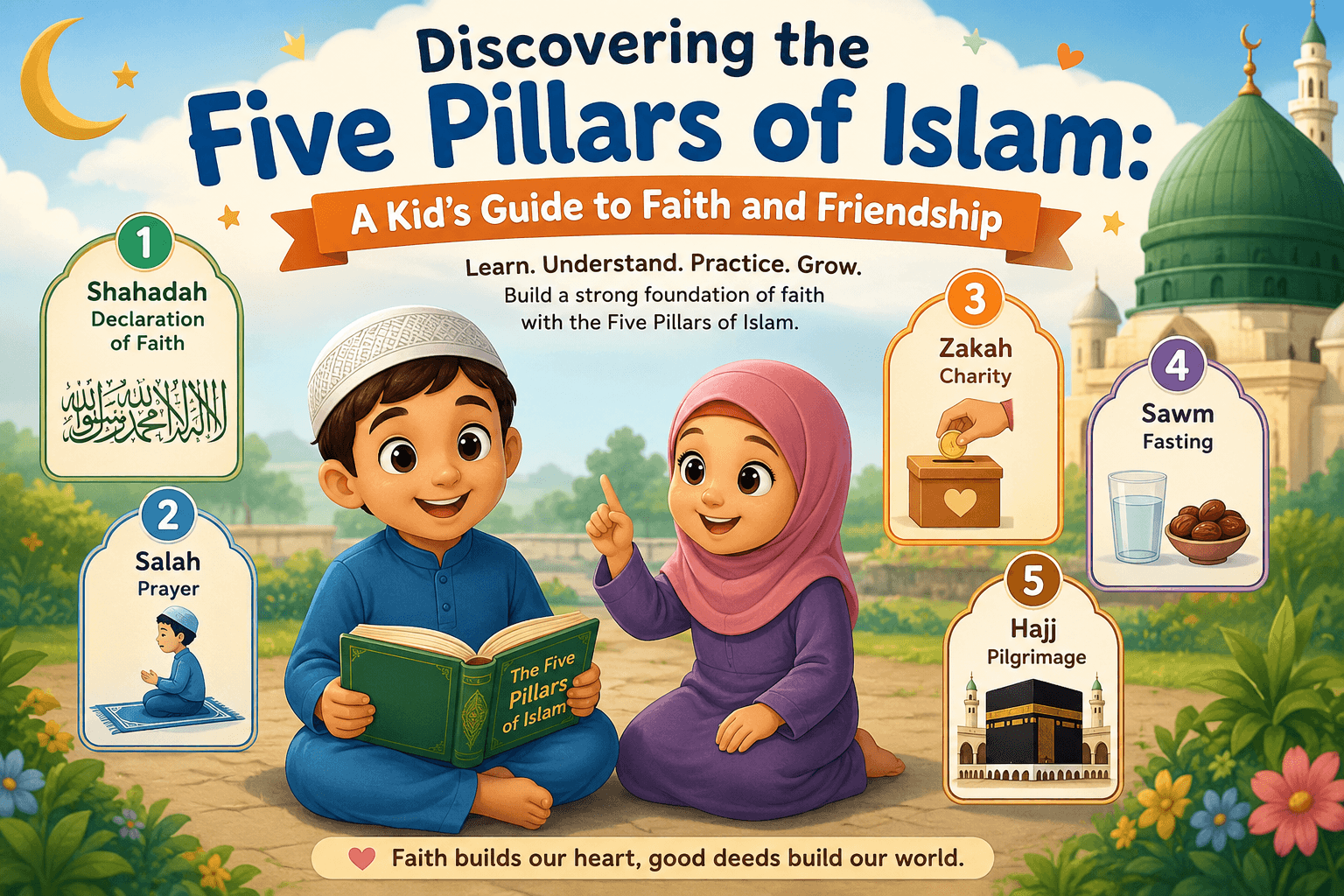
What are the Five Pillars of Islam?
Shahadah : The First Pillar of Islam
What Is Shahadah?
Shahada is one of the most important among the five pillars of islam.Shahada is like making the coolest friend ever – Allah! You know how you have that one friend who’s always there for you, listens to your stories, and makes you feel super special? Well, saying Shahada is your way of telling the world, “Hey, I’ve got the best friend in the whole universe, and His name is Allah!”Imagine you and Allah have this super awesome connection. It’s like when you find a friend who gets you and makes you feel amazing. When you say Shahada, you’re shouting, “I’ve found the most incredible friend, and I want everyone to know!”
اَشْهَدُ اَنْ لَّآ اِلٰهَ اِلَّا اللهُ وَحْدَہٗ لَاشَرِيْكَ لَہٗ وَاَشْهَدُ اَنَّ مُحَمَّدًا عَبْدُهٗ وَرَسُولُہٗ
” I bear witness that none is worthy of worship but ALLAH, the One alone, without a partner, and I bear witness that Muhammad is His servant and Messenger.”
Fun Twist: Now, let’s add a sprinkle of fun! Think of saying Shahada as having a secret handshake with Allah. You know how secret handshakes are something only you and your best friends share? Well, Shahada is your super-duper special handshake with Allah. It’s like having your own unique way of saying, “We’re friends, and this is our cool handshake!”
Close your eyes and imagine that handshake. Maybe it involves a high-five, a little spin, or even a funny dance move. Shahada is your way of doing that special handshake with Allah to show that you two have the most awesome friendship ever!
So, whenever you say Shahada, it’s like giving Allah a virtual high-five and saying, “Thanks for being my friend, Allah! You’re the best!”
Remember, having Allah as your friend is like having a friend who’s always there, no matter what. And saying Shahada is your way of celebrating this amazing friendship with the whole world!
Why Is Shahadah Important?
Shahadah is the first pillar of Islam and the foundation of a Muslim’s faith. It is the declaration that “There is no god but Allah, and Muhammad (peace be upon him) is His Messenger.” By sincerely believing and saying these words, a person accepts Islam and begins a lifelong journey of worship, kindness, and obedience to Allah.
For children, Shahadah is more than just words to memorize. It teaches them to love Allah, trust Him in every situation, and follow the beautiful example of Prophet Muhammad (ﷺ). Understanding Shahadah helps kids develop good character, honesty, respect, and compassion for others.
Every Muslim’s prayers, fasting, charity, and other acts of worship are built upon the belief in Shahadah. It reminds us that Allah is our Creator, and He alone deserves our worship. This belief gives us purpose, hope, and guidance throughout our lives.
Learning the importance of Shahadah at a young age helps children build a strong Islamic identity and encourages them to make choices that please Allah. It is the first step toward becoming a responsible, kind, and faithful Muslim.
Key Takeaway: Shahadah is the heart of Islam. It teaches us to believe in one Allah, follow Prophet Muhammad (ﷺ), and live a life filled with faith, kindness, and good deeds.
Salah: The Second Pillar of Islam
What Is Salah?
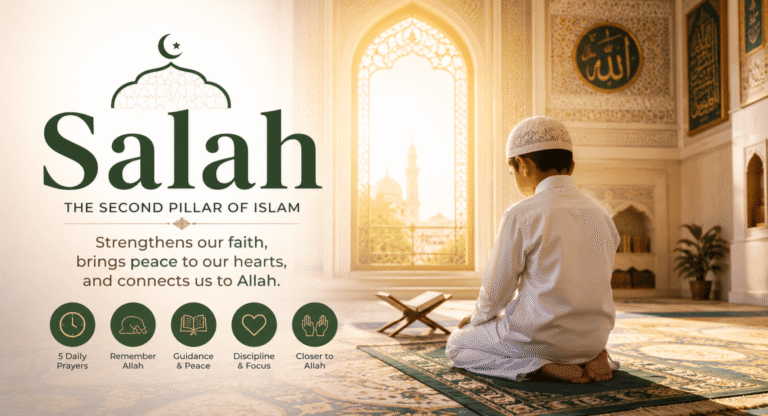
Salah is the second pillar of Islam and one of the most important acts of worship for Muslims. It is the daily prayer that helps Muslims build a strong connection with Allah. Every Muslim who has reached the age of responsibility performs five daily prayers at specific times to remember Allah, seek His guidance, and thank Him for His countless blessings.
وَأَقِيمُوا الصَّلَاةَ وَآتُوا الزَّكَاةَ وَارْكَعُوا مَعَ الرَّاكِعِينَ
“And establish Salah and give Zakah, and bow down (in worship) along with those who bow down (in worship)” (Surah Baqarah 2:43)
For children, Salah is a beautiful way to learn discipline, gratitude, and love for Allah. During prayer, Muslims recite verses from the Holy Quran, make dua (supplication), and bow and prostrate to show humility and devotion. Salah reminds us that Allah is always near, listening to our prayers and guiding us through every stage of life.
Praying regularly also teaches valuable life skills such as punctuality, patience, self-control, and responsibility. Whether at home, in the mosque, or while traveling, Salah encourages Muslims to pause their daily activities and focus on their relationship with Allah.
Learning about Salah at a young age helps children develop strong Islamic values and good habits that stay with them throughout their lives. It is not just a prayer—it is a daily reminder to worship Allah, seek His mercy, and live with faith and kindness.
Benefits of Salah
One of the greatest benefits of Salah is that it brings us closer to Allah. During prayer, we praise Allah, ask for His forgiveness, and seek His help in every situation. This connection gives believers comfort, hope, and confidence, especially during difficult times.
Salah also teaches discipline and responsibility. Performing prayers at their appointed times helps children and adults develop good habits, manage their time wisely, and stay committed to their daily responsibilities. It encourages punctuality, patience, and consistency in everyday life.
Key Benefits of Salah
- Strengthens faith and trust in Allah.
- Brings peace, comfort, and spiritual happiness.
- Teaches discipline, punctuality, and responsibility.
- Encourages kindness, honesty, and good manners.
- Helps Muslims remember Allah throughout the day.
- Builds a strong foundation for a lifelong connection with Islam.
Key Takeaway: Salah is much more than a daily prayer. It is a powerful act of worship that brings Muslims closer to Allah, strengthens faith, builds good character, and helps children and adults live a balanced, disciplined, and meaningful life.
What Is Zakat? Sharing with Those in Need
What Is Zakat?
Zakat is the third pillar of Islam and an important act of worship that teaches Muslims to care for those in need. The word “Zakat” means purification and growth. It is a form of charity that eligible Muslims give each year by donating a small portion of their wealth to help poor and needy people. By giving Zakat, Muslims purify their wealth and earn rewards from Allah.
For children, learning about Zakat helps them understand the importance of sharing, helping others, and being grateful for what Allah has given them. Even if children are not required to pay
Zakat, they can practice generosity by donating toys, clothes, food, or part of their savings to people in need. These small acts of kindness help build good character and strengthen their love for helping others.
Zakat is not just about giving money—it is a way to show kindness, generosity, and compassion. It reminds Muslims that everything they have is a blessing from Allah and that they should share their blessings with others. Through Zakat, families in need can receive support for food, clothing, education, healthcare, and other essential needs.
Key Takeaway: Zakat is the third pillar of Islam. It is an act of charity that teaches Muslims to share their wealth, help those in need, and show gratitude for Allah’s blessings while building a compassionate and caring society.
Sawm (Fasting): The Great Ramadan Adventure
What Is Sawm?
Sawm is the fourth pillar of Islam and refers to fasting during the holy month of Ramadan. From dawn (Fajr) until sunset (Maghrib), Muslims who are healthy and have reached puberty refrain from eating, drinking, and other physical needs as an act of worship. Sawm is performed to seek Allah’s pleasure, strengthen faith, and develop self-discipline.
Picture Sawm as your very own VIP pass to the coolest adventure ever – Ramadan! It’s like getting an exclusive ticket to a month-long training camp, but guess what? This camp isn’t for your muscles; it’s for your heart and mind. During Sawm, you get to fast and focus on being patient, grateful, and kind. It’s not just any adventure; it’s a fantastic journey of self-discovery, where you become the superhero of your own story!
يَٰٓأَيُّهَا ٱلَّذِينَ ءَامَنُوا۟ كُتِبَ عَلَيْكُمُ ٱلصِّيَامُ كَمَا كُتِبَ عَلَى ٱلَّذِينَ مِن قَبْلِكُمْ لَعَلَّكُمْ تَتَّقُونَ
O you who have believed, decreed upon you is fasting as it was decreed upon those before you that you may become righteous – (surah Baqrah :1830
Key Takeaway: Sawm is the fourth pillar of Islam. By fasting during Ramadan, Muslims strengthen their faith, develop patience and self-control, show gratitude to Allah, and grow into kind, caring, and responsible individuals.
Hajj :The Fifth Pillar of Islam
What Is Hajj?
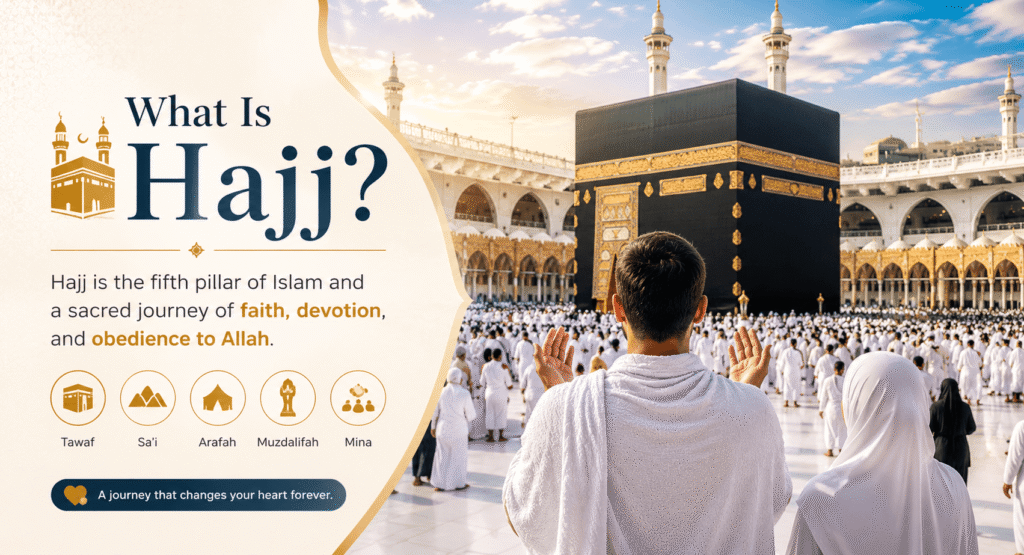
Hajj is the fifth pillar of Islam and one of the most important acts of worship for Muslims. It is a sacred pilgrimage to the holy city of Makkah (Mecca), Saudi Arabia, which every Muslim who is physically and financially able must perform at least once in their lifetime. Hajj takes place every year during the Islamic month of Dhul Hijjah and brings millions of Muslims from around the world together in worship.
Imagine Hajj as the grand finale, the most extraordinary adventure – a pilgrimage to Mecca! While you might not go on this epic journey right now, consider it a super-special family quest. It’s like the ultimate family vacation, but instead of a theme park, you’re heading to the most magical place for worship – Mecca! It’s not just a trip; it’s a journey where families from all around the world come together for something truly amazing.
“Indeed, as-Safa and al-Marwah are among the symbols of Allah. So whoever makes Hajj to the House or performs ‘umrah – there is no blame upon him for walking between them. And whoever volunteers good – then indeed, Allah is appreciative and Knowing.” [Surah Al-Baqarah 2:158]
During Hajj, pilgrims perform a series of special rituals that were taught by Prophet Ibrahim (AS), Prophet Ismail (AS), and Prophet Muhammad (ﷺ). These rituals include circling the Holy Kaaba (Tawaf), walking between the hills of Safa and Marwah (Sa’i), standing in prayer at the Plain of Arafat, and other acts of devotion. Each ritual reminds Muslims of faith, patience, sacrifice, and complete trust in Allah.
Hajj is also a time for Muslims to seek Allah’s forgiveness, strengthen their faith, and make sincere prayers. It inspires believers to return home with a renewed commitment to living a life filled with compassion, honesty, and good deeds.
Key Takeaway: Hajj is the fifth pillar of Islam. It is a sacred pilgrimage to Makkah that teaches Muslims about faith, unity, equality, patience, and complete devotion to Allah while strengthening their relationship with Him.
